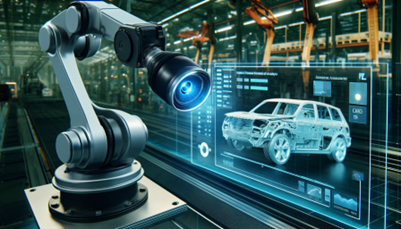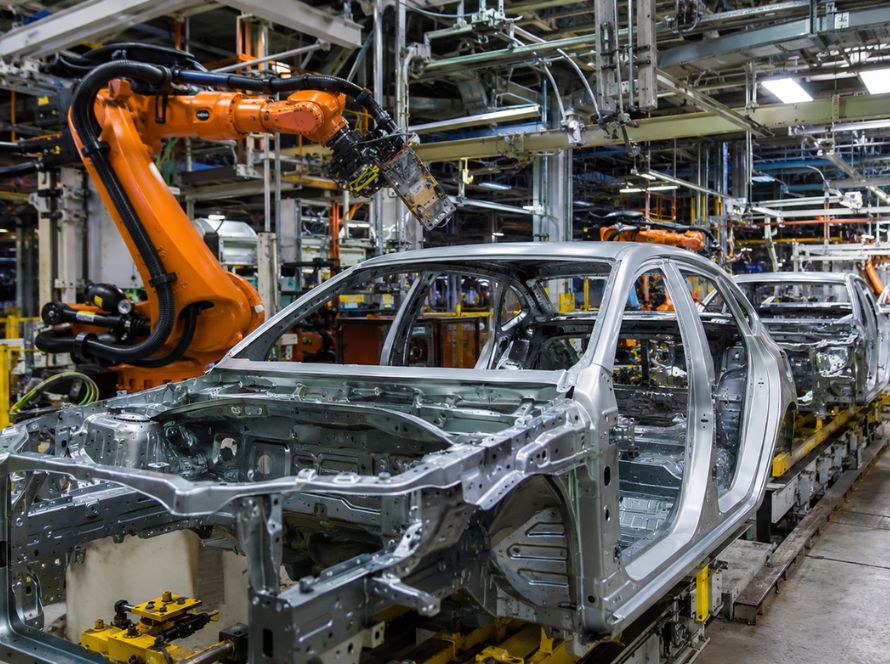
The modern auto assembly plant is one of the most advanced environments in automotive manufacturing. What was once a largely manual process has evolved into a highly connected ecosystem where robotics, quality control systems, and intelligent inspection technologies work together to produce vehicles with exceptional precision.
Today, cameras inspect components in real time, robots perform repetitive tasks with remarkable accuracy, and connected systems monitor every stage of production. As vehicles become more complex due to electrification, ADAS technologies, and increasing customer expectations, auto assembly plants are playing a central role in the digital transformation of automotive manufacturing.
What Is an Auto Assembly Plant?
An auto assembly plant is the facility where thousands of individual parts come together to become a finished vehicle. From structural components and powertrains to electronics, batteries, and interior systems, every element must be assembled in the correct sequence and according to strict quality standards.
Although the concept sounds straightforward, the reality is incredibly complex. A modern vehicle can contain more than 30,000 parts sourced from suppliers around the world. Coordinating their arrival, assembly, and inspection requires a level of precision that few industries can match.
Most automotive plants manage processes such as:
- Vehicle body assembly
- Surface treatment and painting
- Interior installation
- Powertrain integration
- Electronics assembly
- Final inspection and testing
The challenge isn’t simply building vehicles. It’s building them consistently, efficiently, and at scale while maintaining the same quality standards for every unit produced.
Key areas inside a modern Auto Assembly Plant
Although production methods vary between manufacturers, most automotive plants are organized around several core areas, each with its own technologies, processes, and quality requirements.
Press Shop: Where Vehicle Components Take Shape
A vehicle begins its journey in the press shop, where large steel or aluminum sheets are stamped into components such as doors, roofs, hoods, and side panels.
This stage is critical because the quality of these parts directly impacts downstream processes, including welding, painting, and final assembly. Even minor dimensional deviations or surface defects can lead to costly rework later in production.
Key press shop operations include:
- Metal stamping and forming
- Trimming and piercing
- Surface inspection
- Dimensional verification
To ensure consistent quality, many automotive plants use automated inspection systems capable of detecting cracks, dents, scratches, and dimensional variations immediately after the stamping process.
Body Shop: Where the Vehicle Takes Shape
Everything starts in the body shop.
This is where the vehicle’s structural frame—commonly known as the Body-in-White (BIW)—is created through welding, joining, and assembly operations.
In many facilities, robots perform more than 90% of welding tasks. Their ability to repeat the same movement thousands of times without variation helps ensure dimensional accuracy and structural integrity.
Typical body shop operations include:
- Robotic welding
- Structural assembly
- Dimensional verification
- Material joining processes
At this stage, precision is critical. Even a minor deviation can affect downstream processes and lead to costly quality issues later in production.
Paint Shop Operations and Surface Quality
Ask many automotive manufacturers which area presents the greatest quality challenge, and the paint shop is often near the top of the list.
Customers may never notice a hidden structural component, but they will immediately spot a paint defect.
The painting process generally includes:
- Surface preparation
- Primer application
- Basecoat painting
- Clearcoat finishing
- Controlled curing
- Surface inspection
Because paint quality directly influences customer perception, manufacturers invest heavily in inspection technologies capable of detecting imperfections such as dust inclusions, orange peel, scratches, and coating inconsistencies.
This is an area where automated inspection solutions have become essential. Advanced vision systems can inspect painted surfaces in real time, helping manufacturers identify defects before vehicles move to final assembly and reducing costly rework.
Final Assembly and Vehicle Integration
The final assembly area is where the vehicle truly comes to life.
This stage involves installing major systems and ensuring everything functions correctly before the vehicle leaves the factory.
Typical operations include:
- Battery or engine installation
- Interior assembly
- Wheel and tire mounting
- Electronics integration
- Software configuration
- Functional testing
By this point, thousands of individual operations have already taken place. The challenge is ensuring that every component is correctly installed, fully traceable, and ready for final validation.
How automation is transforming Auto Assembly Plants
Few industries have embraced automation as extensively as automotive manufacturing.
The reasons are easy to understand. Automation helps manufacturers improve consistency, increase throughput, and reduce the risk of human error while maintaining high quality standards.
Today, automation supports:
- Production efficiency
- Product consistency
- Worker safety
- Process optimization
- Quality control
What makes modern plants particularly interesting is that automation no longer focuses solely on repetitive tasks. Increasingly, it is being used to support decision-making, process optimization, and predictive quality management.
The Role of Robotics in Vehicle Assembly
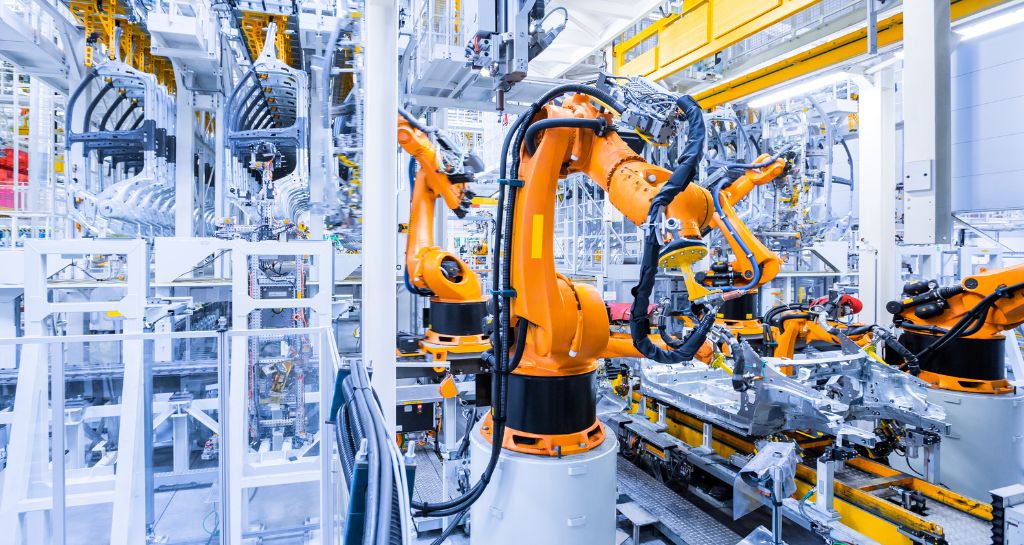
Robots are now essential throughout the production process.
You’ll find them performing tasks such as:
- Welding
- Material handling
- Painting
- Assembly operations
- Packaging and logistics
Unlike manual operations, robotic systems maintain the same level of precision hour after hour, day after day.
This consistency is one of the main reasons why automotive manufacturing has achieved such high levels of productivity and quality.
Collaborative Robots in Automotive Manufacturing
A newer development is the rise of collaborative robots, or cobots.
Unlike traditional industrial robots that operate within safety cages, cobots are designed to work alongside human operators.
They’re particularly useful for:
- Precision assembly tasks
- Ergonomically demanding operations
- Flexible manufacturing environments
Rather than replacing people, these systems enhance human capabilities by taking over repetitive or physically demanding tasks while allowing operators to focus on higher-value activities.
Quality Control in Auto Assembly Plants
Building a vehicle is one challenge. Building the same vehicle to the same quality standard thousands of times is another entirely.
Quality control plays a central role throughout the manufacturing process.
Manufacturers must identify defects quickly because the later a problem is discovered, the more expensive it becomes to fix.
Potential consequences include:
- Rework costs
- Production delays
- Warranty claims
- Customer dissatisfaction
That’s why inspection is integrated throughout the production line rather than being limited to the end of the process.
Why Quality Inspection Is Critical in Vehicle Manufacturing
Modern inspection systems verify everything from component placement to surface finish.
Common inspection tasks include:
- Surface quality verification
- Gap and flush measurement
- Component presence checks
- Assembly validation
- End-of-line testing
As production volumes increase and vehicle designs become more complex, relying solely on manual inspection becomes increasingly difficult.
This has accelerated the adoption of advanced inspection technologies powered by Machine Vision and automated analytics.
Common Defects Detected During Vehicle Assembly
Some of the most frequent issues identified during assembly include:
- Surface scratches
- Paint defects
- Misaligned panels
- Missing components
- Assembly sequence errors
Detecting these problems early prevents them from moving further down the production line, where corrective actions become more expensive and time-consuming.
Machine Vision and AI in Auto Assembly Plants
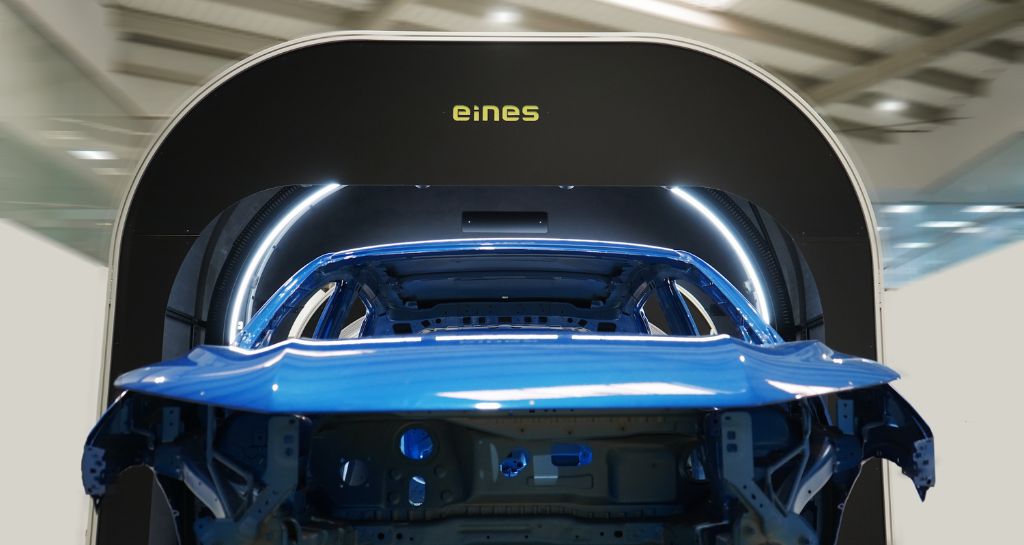
The introduction of Machine Vision has transformed how automotive manufacturers approach quality control.
Instead of relying exclusively on human observation, manufacturers can now use cameras, advanced lighting systems, and intelligent software to inspect products automatically.
Machine Vision systems can:
- Detect defects in real time
- Verify assembly accuracy
- Measure dimensions
- Monitor quality trends
This enables manufacturers to maintain inspection consistency even in high-volume production environments.
How Machine Vision improves Automotive Quality Control
One of the greatest advantages of Machine Vision is objectivity.
Human inspectors can become fatigued, distracted, or influenced by environmental conditions. Automated inspection systems maintain the same criteria throughout every shift.
Benefits include:
- Faster inspection speeds
- Greater accuracy
- Improved consistency
- Continuous operation
For manufacturers pursuing zero-defect production strategies, these capabilities are becoming increasingly valuable.
Real-Time Defect Detection and Predictive Quality
When combined with Artificial Intelligence, inspection systems become even more powerful.
AI can analyze production data and:
- Classify defect types
- Identify recurring patterns
- Detect process drift
- Recommend corrective actions
Instead of simply finding defects after they occur, manufacturers can begin preventing them before they happen.
This shift toward predictive quality management is one of the most significant developments in modern automotive manufacturing.
Industry 4.0 and the future of Auto Assembly Plants
The rise of Industry 4.0 is changing how automotive plants operate.
Machines, sensors, inspection systems, and software platforms are increasingly connected, generating continuous streams of production data.
Key technologies include:
- Digital Twins
- Industrial IoT
- Predictive Maintenance
- Advanced Analytics
- Artificial Intelligence
Together, these tools create smarter manufacturing environments capable of adapting to changing conditions in real time.
Smart Factories and Connected Manufacturing Systems
In a smart factory, data becomes a production asset.
Connected systems allow manufacturers to:
- Monitor production in real time
- Improve decision-making
- Optimize resources
- Enhance quality control
- Increase operational efficiency
The result is a more agile, efficient, and resilient manufacturing operation.
How EINES supports inspection across the entire Auto Assembly Plant
At EINES we develop advanced vision systems and automated inspection technologies that support quality control throughout the entire manufacturing process.
Our solutions can be applied across key production areas, including:
- Body Shop Inspection: dimensional verification, assembly validation, and gap & flush measurement.
- Paint Shop Inspection: automated detection of surface defects such as scratches, dust inclusions, orange peel, and coating inconsistencies.
- Final Assembly Inspection: verification of component installation, assembly quality, and production traceability.
- Battery Assembly Inspection: advanced inspection systems designed to support the growing demands of electric vehicle manufacturing.
Beyond complete vehicle production lines, EINES solutions can also be integrated into the manufacturing processes of both OEMs and Tier 1 suppliers, adapting to the specific quality requirements and production challenges of each environment. The same inspection technologies used in vehicle assembly can be applied to individual automotive components, enabling automated quality control for wheels, rims, doors, headliners, body panels, battery systems, and other critical parts. This flexibility allows manufacturers to implement advanced inspection and traceability systems at virtually any stage of the production process, from component manufacturing to final vehicle assembly.
By integrating Machine Vision, Artificial Intelligence, and automated analytics into production environments, EINES helps manufacturers improve inspection accuracy, reduce defects, and optimize quality control at every stage of the assembly process.
If you’re looking to improve quality control, increase inspection accuracy, or accelerate your digital transformation strategy, we can help.
Contact usto discoverhow intelligent inspection solutions can optimize yourauto assembly plant operations.
Frequently Asked Questions about auto assembly plants
What is an auto assembly plant?
An auto assembly plant is a manufacturing facility where thousands of components are assembled into finished vehicles using automated systems, robotics, and quality control technologies.
How do auto assembly plants work?
Modern auto assembly plants combine body construction, painting, component installation, quality inspection, and final testing within highly coordinated production lines.
What technologies are used in modern auto assembly plants?
Common technologies include robotics, Machine Vision systems, Artificial Intelligence, Industrial IoT, Digital Twins, and automated quality inspection solutions.
Why is quality control important in automotive manufacturing?
Quality control helps manufacturers detect defects early, reduce rework costs, improve customer satisfaction, and ensure compliance with safety standards.
How does Machine Vision improve vehicle assembly?
Machine Vision systems automatically inspect components and assemblies, detect defects in real time, verify dimensions, and improve production consistency.