Rim inspection has become one of the most critical processes in modern automotive manufacturing. As vehicle safety standards continue to rise and production lines become faster and more automated, manufacturers need inspection systems capable of detecting even the smallest wheel defects before they reach final assembly.
In the automotive industry, precision is everything. But when it comes to wheels, the margin for error is practically zero. A small defect in a rim may seem insignificant during production, yet once the vehicle is on the road, that same imperfection can affect safety, durability, and driving stability.
That’s why rim inspection is no longer limited to manual visual checks.
What is rim inspection in automotive manufacturing?
Rim inspection is the process of analyzing alloy wheels to verify structural integrity, dimensional accuracy, and surface quality before final vehicle assembly.
In modern automotive manufacturing environments, inspection systems typically evaluate:
- Surface defects
- Structural anomalies
- Geometric tolerances
- Coating quality
- Traceability markings
Most inspection processes are now fully automated and integrated directly into production lines.
Why rim inspection is critical for automotive manufacturing
The answer lies in long-term performance and safety.
Even microscopic defects can become critical after repeated exposure to:
- Road vibration
- Braking forces
- Temperature fluctuations
This is particularly important in electric vehicles, where heavier battery systems place additional stress on wheels.
Common defects detected during rim inspection
Modern Machine Vision inspection systems can identify a wide range of wheel defects with far greater precision than manual inspection.
Most common rim defects
Typical defects include:
- Cracks and fractures
- Surface porosity
- Scratches and dents
- Coating inconsistencies
- Geometric deformation
- Machining irregularities
Many of these issues are impossible to detect consistently at production-line speed without automated technologies.
Surface Defects vs Structural Defects
Not all wheel defects carry the same level of risk.
Surface Defects
These mainly affect:
- Appearance
- Paint quality
- Customer perception
Examples include:
- Scratches
- Surface waviness
- Paint imperfections
Structural Defects
Structural problems directly impact wheel performance and safety.
Examples include:
- Cracks
- Internal porosity
- Material deformation
- Dimensional inconsistencies
This is where Artificial Intelligence becomes especially valuable, helping manufacturers classify defects automatically and prioritize critical anomalies.
Why Microscopic defects matter
One of the biggest challenges in wheel production is that microscopic defects can grow over time.
Under repeated stress cycles, even tiny cracks may expand gradually until they compromise wheel integrity.
That’s why modern automotive manufacturing increasingly relies on high-precision Machine Vision systems and AI-powered analytics to detect defects as early as possible.
How automated rim inspection systems work
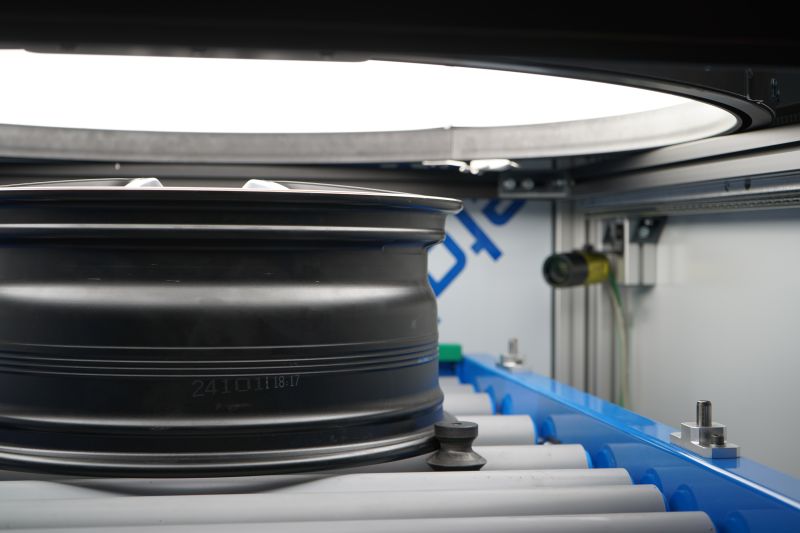
Modern systems combine optical technologies, software, and AI-driven analytics to inspect rims in real time.
The process typically includes:
- Image acquisition using high-resolution cameras
- 3D scanning and dimensional measurement
- AI-based defect detection
- Classification and reporting
- Integration with production process
This entire process happens within seconds.
Inline vs Offline Rim Inspection
Modern automotive plants typically use two inspection approaches.
Inline Inspection
- Integrated directly into the production line
- Real-time defect detection
- Higher efficiency and scalability
Offline Inspection
- Performed after production
- Often manual or semi-automated
- Slower and more reactive
As automotive manufacturing becomes more automated, inline inspection is becoming the industry standard.
The role of machine vision in rim inspection
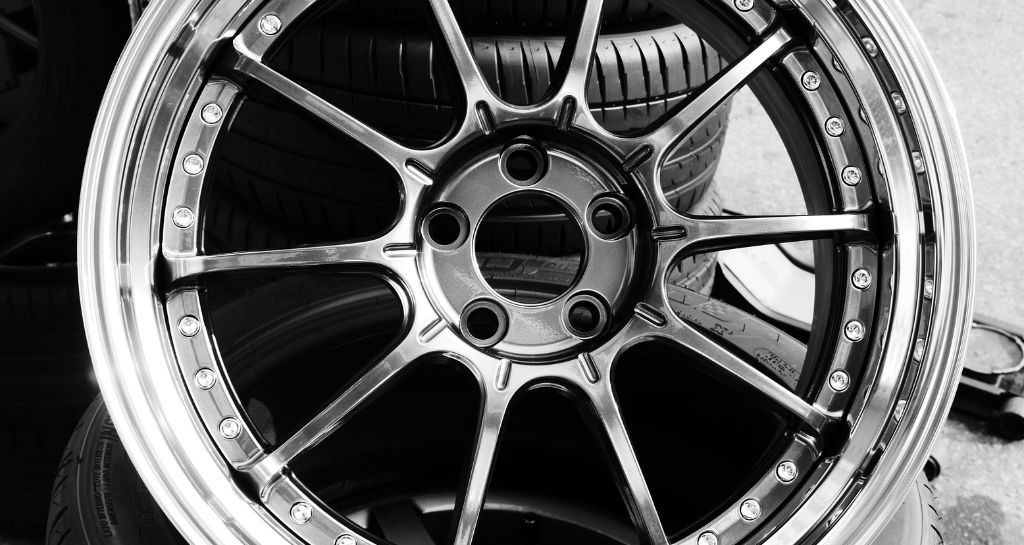
The development of Machine Vision has completely transformed wheel inspection processes.
Traditional inspection methods depended heavily on human operators visually checking surfaces. While experienced inspectors remain important, Machine Vision systems deliver much greater consistency and scalability.
Modern systems can:
- Detect microscopic surface defects
- Analyze wheel dimensions with high precision
- Compare results against predefined tolerances
- Operate continuously without fatigue
This is especially valuable in large automotive manufacturing facilities where thousands of wheels are inspected daily.
How Artificial Intelligence improves rim defect detection
If Machine Vision acts as the eyes of the inspection system, Artificial Intelligence acts as the decision-making layer.
AI-powered systems can:
- Learn from historical defect data
- Improve classification accuracy over time
- Reduce false positives
- Detect recurring production issues
For example, if a machining station begins generating an unusual number of surface defects, AI systems can identify the trend early and trigger corrective actions before quality problems escalate.
Industry 4.0 and Predictive Quality Control
The integration of inspection systems into Industry 4.0 environments is changing the role of quality control in automotive manufacturing.
Inspection systems are no longer isolated checkpoints. They are becoming connected intelligence platforms capable of:
- Real-time analytics
- Predictive maintenance
- Process optimization
- Automated quality reporting
This transition is helping manufacturers move closer to zero-defect manufacturing.
Rim inspection technologies used in automotive plants
Modern rim inspection combines multiple technologies depending on production requirements.
Common rim inspection technologies
- High-resolution cameras
- Laser scanners
- 3D vision systems
- Eddy current testing
- X-ray inspection systems
Each technology addresses different inspection challenges within automotive manufacturing.
For example:
- X-ray systems detect internal porosity
- 3D scanners verify geometry and roundness
- Machine Vision systems inspect visible surface quality
Together, these technologies create a comprehensive quality control strategy.
The future of rim inspection in automotive manufacturing
The future of rim inspection will be increasingly driven by:
- Artificial Intelligence
- Advanced Machine Vision systems
- 3D inspection technologies
- Fully connected Industry 4.0 production environments
As automotive manufacturing becomes smarter and more data-driven, inspection systems will play an even more strategic role in production optimization and quality assurance.
ERSI: Surface defect rim inspection through Machine Vision systems
Not all rim inspection systems are designed to detect the same type of defects. While some technologies focus on structural analysis or dimensional verification, ERSI by EINES is specifically developed for theautomatic detection of surface defects in automotive wheels through advanced Machine Vision systems.
ERSI enables manufacturers to inspect cosmetic and surface-quality defects directly on the production line with high precision and full process integration. The system uses high-resolution cameras, optimized lighting configurations, and Artificial Intelligence algorithms to identify even subtle imperfections that may affect wheel appearance and perceived quality.
Typical defects detected by ERSI include:
- Scratches and dents
- Paint and coating imperfections
- Surface waviness
- Marks and cosmetic anomalies
- Finishing inconsistencies
- Small visual defects difficult to detect manually
Unlike traditional manual inspection processes, ERSI performs real-time automated rim inspection at production-line speed, ensuring consistent quality control without operator fatigue or subjective evaluations.
One of the key advantages of Machine Vision-based surface inspection is repeatability. In automotive manufacturing, even small cosmetic defects can generate customer complaints, rework costs, or rejected components. ERSI helps manufacturers minimize false rejects while improving defect detection reliability across large-scale production environments.
The system can also be integrated into fully connected Industry 4.0 manufacturing environments, allowing real-time traceability, defect reporting, production analytics, and continuous process optimization.
As automotive manufacturers continue increasing quality requirements for alloy wheels and painted surfaces, advanced surface defect inspection systems like ERSI are becoming essential tools for maintaining both production efficiency and brand quality standards.
Contact EINES to discover how advanced rim inspection solutions can support your automotive manufacturing strategy.