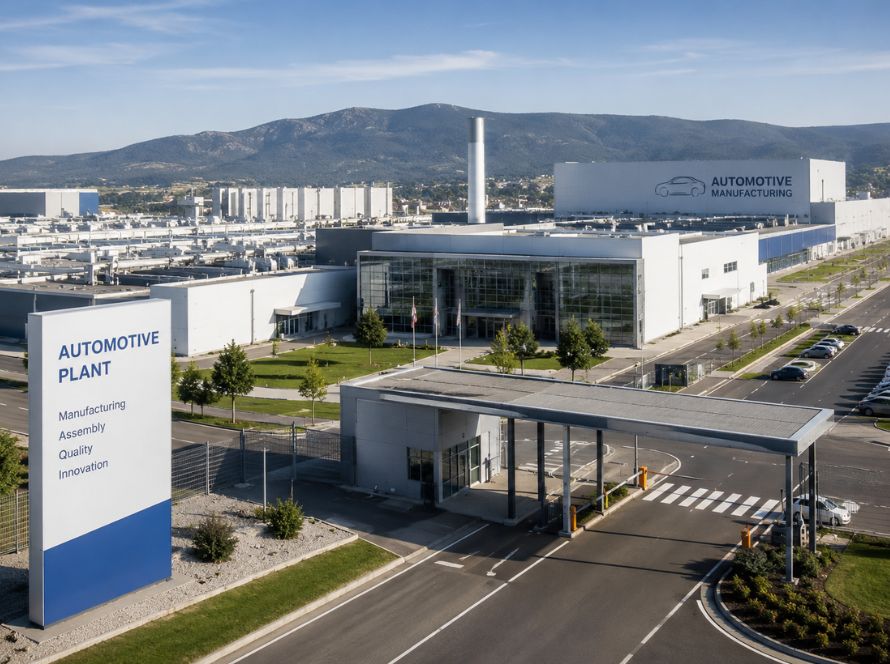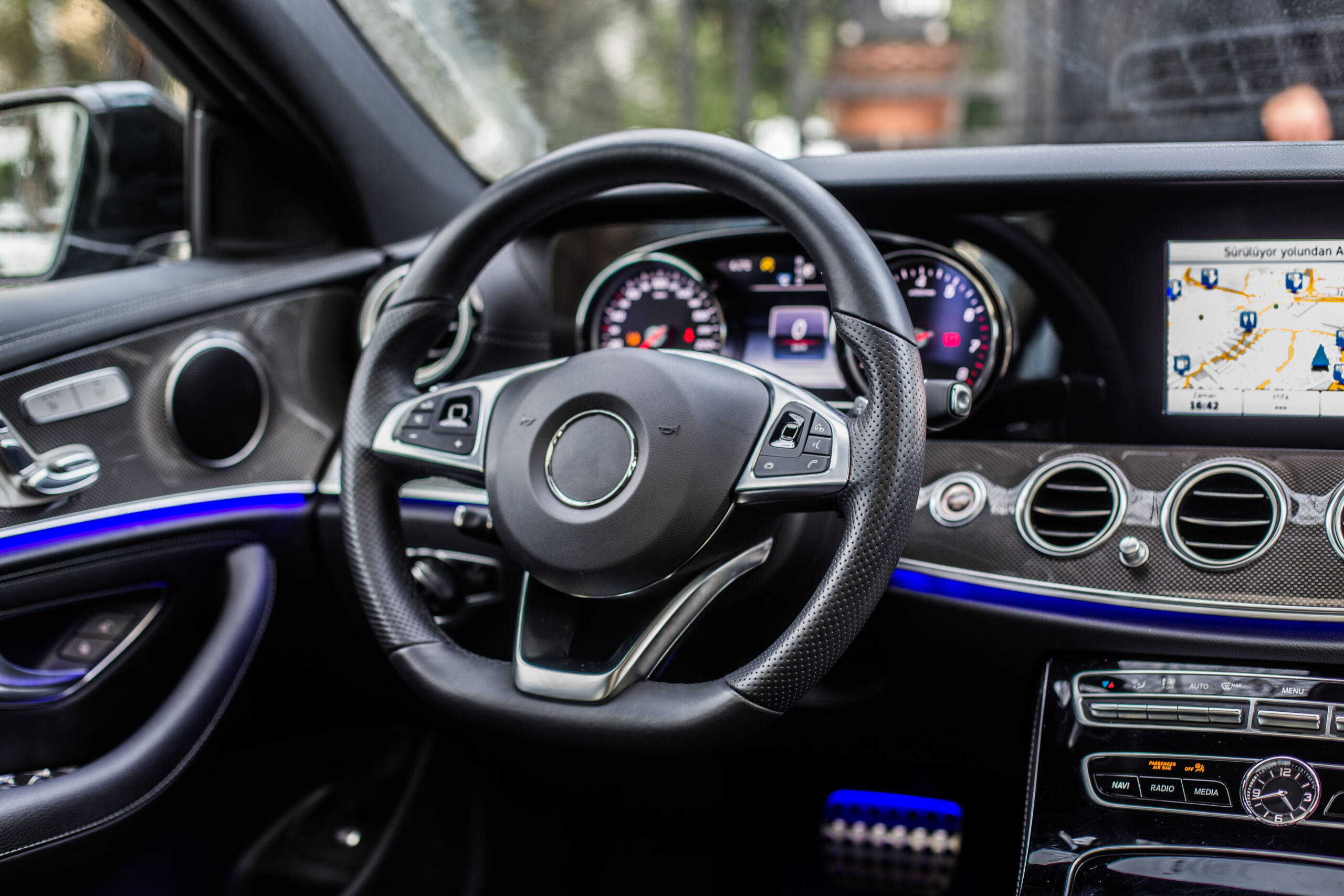
Automotive interiors are evolving rapidly, integrating digital displays, ambient lighting, touch controls, soft-touch materials, and increasingly sophisticated cockpit systems.
Modern consumers now evaluate vehicles not only by performance, but also by interior quality, comfort, design, and user experience.
As automotive interiors become more complex, manufacturers and Tier-1 suppliers face growing quality challenges.
Maintaining consistent standards across surfaces, assemblies, and lighting systems is increasingly difficult.
Electronic components also require precise inspection and validation throughout production.
This is driving the adoption of AI-powered inspection and machine vision systems capable of ensuring zero-defect automotive interior production.
The Global Landscape of Automotive Suppliers
The July 2025 list once again highlighted the dominance of companies such as Bosch, Denso, and Magna, whose revenues and technological breadth shape the direction of global mobility. Each year, Automotive News publishes its Top 50 Global Automotive Suppliers ranking, highlighting the evolution of the industry. The 2025 edition once again underscored the leadership of companies such as Bosch, Denso, and Magna International in shaping global mobility.
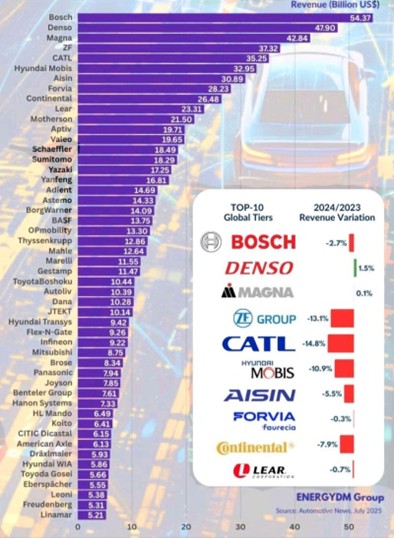
These companies operate across multiple domains, including electronics, powertrain, electrification, and ADAS. Within this broader supply chain, automotive interior manufacturers are becoming increasingly important.
From instrument panels to door trims, cockpits, headliners, side panels, and illuminated components, vehicle interiors have become highly sophisticated.
Today’s automotive interiors combine aesthetics, electronics, and engineering precision within a single technical ecosystem.
Why Automotive Interiors matter more than ever?
Modern consumers evaluate vehicles not only by performance but by the sensory experience they provide: touch, light, sound, and integrated digital interaction.
This shift places immense pressure on interior suppliers to deliver:
- Perfect visual and tactile quality
- Integrated electronics
- Ambient and functional lighting
- Lightweight structures
- Seamless material transitions
- Zero-defect surface and geometric finishes
Major suppliers specializing in interior systems include Yanfeng, Forvia, Lear Corporation, Adient, Toyoda Gosei, and Grupo Antolín.
These companies focus on cockpit modules, trim panels, seating systems, and interior electronics. These components must meet hundreds of specifications across materials, colors, patterns, electrical features, alignment, structural integrity, and illumination levels—making quality management one of the biggest challenges in the industry.
The Rising Challenge: Ensuring Perfect Finish in Automotive Interiors
Growing Complexity of Interior Parts
A modern instrument panel or door panel integrates multiple technologies and materials into a single assembly. These components may include decorative surfaces, soft-touch foams, harnesses, touch sensors, displays, LED light guides, clips, and fasteners.
This complexity increases the risk of defects and makes manual inspection inconsistent, slow, and error-prone.
What are the top problem Areas Reported by OEM Quality Teams?
- Surface defects (scratches, dents, sink marks, gloss deviations)
- Trim inspection issues (gaps, flushness deviations, color mismatch)
- Electrical and lighting inconsistencies (LED failures, hot spots, uniformity issues)
- Assembly problems (missing clips, misaligned components)
- Traceability failures (incorrect labels, barcode issues)
External Sources for OEM Quality Issues:
- J.D. Power IQS (Initial Quality Study) – Industry defect trends.
- IATF 16949 Quality Requirements
- AIAG Standards for Quality & Traceability
These areas directly impact car interior quality ratings and customer satisfaction.
How Leading Suppliers Are Transforming Quality Control ?
From Manual Inspection to Intelligent Automation Traditionally, interior defect detection relied heavily on: Visual inspectors, basic sensors and random sampling This approach no longer meets OEM demands for zero-defect production and comprehensive compliance.
Leading interior suppliers are shifting toward AI-based inspection, enabling:
- Real-time defect detection
- Automated trim inspection
- Complete dashboard inspection
- Verification of hundreds of specifications in seconds
- Full traceability and data collection
- Continuous learning and improvement
Watch the Demo: AI Error-Proofing for Automotive Interiors
A New Era for Automotive Interior Quality
As automotive interiors become more technologically rich, visually refined, and central to the driving experience, the need for error-proof, automated inspection has never been greater. AI is not just a complementary tool—it’s becoming the industry standard for ensuring every dashboard, door panel, and trim piece meets the highest expectations for car interior quality.
Whether you are an OEM, Tier-1 supplier, or quality engineering team, adopting AI-based inspection technologies is key to achieving:
- Zero-defect production
- Faster cycle times
- Reliable interior defect detection
- Standardized quality across global plants
- Reduced rework and warranty issues
AI & Vision Systems: The New Standard for Automotive Interior Quality
Modern automotive interior production demands 100% verification at end-of-line (EOL), and this is where EINES MEP (Multi-Error Proofing) systems play a critical role.
These automated AI-vision solutions are designed to inspect complete interior modules—whether door panels, headliners, cockpits, instrument panels, center consoles or any other trim assembly—ensuring that every component meets OEM specifications before leaving the plant.
The MEP EOL platform consolidates multiple inspection technologies into a single, unified station capable of performing hundreds of checks in seconds. This ensures consistent quality, reduces manual inspection errors, and guarantees that each part is validated both visually and electrically.
Below is a summary of the core inspection capabilities included in the system:
- Component Check: Verifies that every required component is present and correctly mounted according to specification—clips, fasteners, inserts, wiring, foams, decorative parts, and more.
- Part-to-Spec Validation: Confirms the correct variant, color, pattern, orientation, and material according to the production order and traceability data.
- ECOS – Electrical Check Out: Performs automated electrical validation of switches, lighting modules, capacitive sensors, harness connections, motors, and electronic subcomponents.
- OCR / OCV: Reads labels, barcodes, laser markings, and printed identifiers to confirm correct references, part IDs, and variant information.
- Surface Inspection: AI-based detection of visible surface issues such as scratches, dents, stains, marks, or other defects that may affect perceived quality.
- Luminocity / Lighting Validation: Checks LED functionality, uniformity, intensity, and correct color behavior for any backlit or ambient lighting features.
- End-to-End Traceability: Automatically links every inspection result to serial number, production order, and plant data, ensuring full compliance with OEM traceability standards.
EINES Vision System: AI Inspection Technologies for Automotive Interiors
Automotive interiors are becoming increasingly sophisticated, requiring manufacturers and Tier-1 suppliers to ensure flawless quality, functionality, and traceability across every component. At EINES Vision Systems , we help automotive manufacturers automate inspection processes through advanced AI vision and error-proofing technologies designed for dashboards, door panels, cockpits, illuminated trims, and complete interior assemblies.
Discover more about our automotive inspection technologies on the EINES Vision Systems website or contact our team for a personalized consultation and live demo.
FAQs
What are automotive interiors?
Automotive interiors refer to all the components and systems located inside a vehicle cabin that contribute to comfort, functionality, safety, and user experience. Modern automotive interiors combine design, electronics, lighting, infotainment, and structural elements to create increasingly connected and sophisticated vehicle environments.
What components are included in automotive interiors?
Automotive interiors include a wide range of components such as dashboards, instrument panels, center consoles, door panels, seats, headliners, trims, infotainment systems, ambient lighting, steering wheels, HVAC controls, and interior electronic modules. In modern vehicles, these systems often integrate displays, touch controls, sensors, and illuminated decorative surfaces.
Why is quality control important in automotive interiors?
Quality control is critical in automotive interiors because even small visual or assembly defects can directly impact customer perception, vehicle quality ratings, and OEM compliance standards. Manufacturers must ensure that surfaces, lighting systems, trims, electronics, and assemblies meet strict specifications for appearance, fit, functionality, and durability while maintaining consistent quality across high-volume production.
How is AI used in automotive interior manufacturing?
AI is used in automotive interior manufacturing to automate inspection, defect detection, assembly verification, and quality validation processes. AI-powered vision systems can detect scratches, dents, gap and flush deviations, lighting inconsistencies, missing components, and traceability errors in real time. These technologies help manufacturers reduce manual inspection, improve production efficiency, and support zero-defect manufacturing strategies.
What defects are common in automotive interiors?
Common defects in automotive interiors include scratches, dents, sink marks, gloss deviations, color mismatches, assembly gaps, misaligned trims, missing clips or fasteners, LED lighting failures, and surface contamination. Manufacturers also monitor electronic issues related to switches, sensors, displays, and illuminated components to ensure proper functionality and perceived vehicle quality.
What is automotive interior inspection?
Automotive interior inspection is the process of verifying the quality, assembly, appearance, functionality, and traceability of interior vehicle components during manufacturing. Modern inspection systems use AI vision technologies, machine learning, metrology, and automated lighting validation to inspect dashboards, door panels, cockpits, trims, and other interior assemblies with high speed and accuracy.
What components are included in automotive interiors?
Why is quality control important in automotive interiors?
How is AI used in automotive interior manufacturing?
What defects are common in automotive interiors?
What is automotive interior inspection?