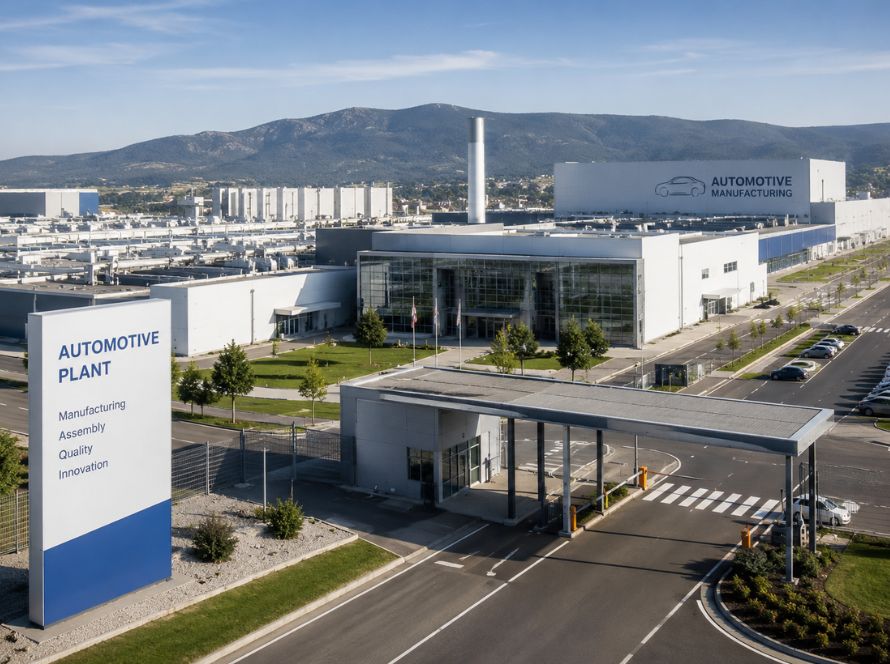
The modern automotive plant is undergoing one of the most significant transformations in its history. What was once a production environment focused primarily on volume and efficiency has become a highly connected ecosystem where automation, data, and intelligent inspection systems work together to achieve new levels of quality and performance.
This evolution is being driven by several factors at once. Vehicle architectures are becoming more complex, electric vehicle production is accelerating, and customer expectations continue to rise. At the same time, manufacturers face constant pressure to improve productivity while maintaining strict quality standards.
As a result, automotive plants are no longer just manufacturing facilities. They are becoming smart production environments where robotics, Machine Vision, Artificial Intelligence, and real-time analytics play a critical role in every stage of vehicle production.
The new reality of the Modern Automotive Plant
Today’s automotive manufacturing facilities look very different from those of a decade ago.
Production lines are increasingly automated, systems are interconnected, and quality data is generated continuously throughout the manufacturing process. In many cases, manufacturers can monitor production performance, equipment status, and inspection results in real time.
This shift is transforming how vehicles are built and how quality is managed.
From traditional production lines to smart factories
For decades, automotive production focused on maximizing throughput through standardized processes and repetitive operations.
Today, manufacturers are embracing the concept of the smart factory, where machines, sensors, software platforms, and inspection systems communicate continuously.
This evolution enables:
- Faster decision-making
- Improved production visibility
- Better resource utilization
- Higher quality consistency
- Greater manufacturing flexibility
The result is a more agile production environment capable of adapting to changing market demands.
Why vehicle manufacturing is becoming more complex
Modern vehicles integrate far more technology than previous generations.
Manufacturers must now manage:
- Advanced driver assistance systems (ADAS)
- Electric powertrains
- Battery systems
- Connectivity platforms
- Over-the-air software updates
- Increasing customization options
Every new feature adds complexity to the manufacturing process, making quality control and traceability more important than ever.
The areas where quality is won or lost
Every automotive plant contains several critical production areas. While each stage contributes to the final product, certain operations have a particularly significant impact on quality.
Press Shop: The Starting Point of Automotive Manufacturing
Every vehicle starts its production journey in the press shop, where flat sheets of steel or aluminum are transformed into the structural and exterior components that will later become part of the vehicle body.
Using high-precision stamping processes, manufacturers produce critical parts such as doors, hoods, roofs, fenders, and side panels. The accuracy achieved at this stage is essential, as any dimensional variation or surface imperfection can affect subsequent operations throughout the production line.
Typical press shop activities include:
- Sheet metal stamping
- Forming and shaping operations
- Trimming and cutting
- Surface quality inspection
- Dimensional control
Because defects generated during stamping can propagate to later manufacturing stages, automotive plants increasingly rely on automated inspection technologies to verify part quality immediately after production. These systems help detect issues such as cracks, dents, scratches, wrinkles, and dimensional deviations before components move on to body assembly.
Body shop: Precision starts with the structure
Quality begins long before a vehicle receives its paint or interior components.
In the body shop, manufacturers create the vehicle structure through welding, joining, and assembly processes. Even small dimensional deviations at this stage can create problems later in production.
Key operations include:
- Robotic welding
- Structural assembly
- Dimensional verification
- Material joining
Modern automotive plants rely heavily on automation to ensure consistency and maintain tight manufacturing tolerances.
Paint shop: The most visible quality challenge
Ask automotive quality managers where defects are most likely to be noticed by customers, and many will point directly to the paint shop.
Paint quality has a direct impact on perceived vehicle quality.
Common paint defects include:
- Dust inclusions
- Orange peel
- Surface scratches
- Coating inconsistencies
- Surface waviness
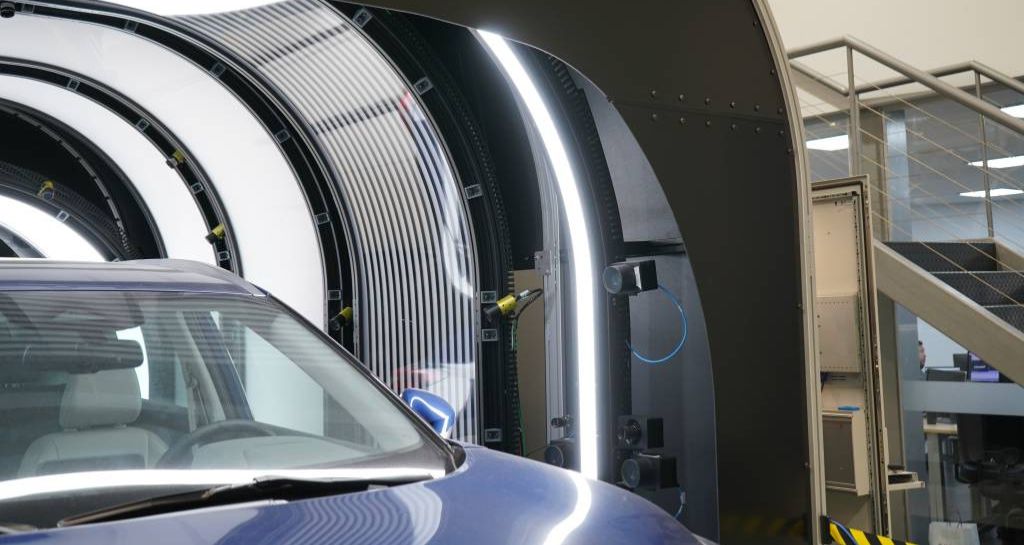
Because these imperfections are often visible to the customer, manufacturers invest heavily in automated inspection systems capable of detecting defects before vehicles leave the production line.
Final Assembly: Where small errors become expensive problems
The final assembly area brings together thousands of individual components.
At this stage, manufacturers install:
- Interior systems
- Electronics
- Wheels and tires
- Powertrain components
- Software and connectivity systems
Even a minor assembly error can lead to costly rework, production delays, or warranty claims.
This is why verification and inspection processes are becoming increasingly important throughout final assembly operations.
Why inspection has become a strategic process
Quality inspection is no longer a final checkpoint performed at the end of production.
Leading manufacturers increasingly view inspection as a strategic process that supports operational efficiency, defect prevention, and continuous improvement.
The cost of detecting defects too late
One of the most expensive scenarios in manufacturing is discovering a defect after multiple production stages have already been completed.
When issues are identified late, manufacturers often face:
- Additional labor costs
- Production interruptions
- Material waste
- Rework expenses
- Delivery delays
The earlier a defect is detected, the lower its impact on production costs.
Moving from reactive to predictive quality
Traditionally, quality control focused on identifying defects after they occurred.
Today, manufacturers are increasingly adopting predictive approaches that use production data to identify potential issues before they become actual defects.
This shift allows manufacturers to:
- Reduce scrap rates
- Improve process stability
- Optimize production efficiency
- Increase product consistency
Zero-Defect manufacturing as an industry goal
The concept of zero-defect manufacturing has become a key objective across the automotive industry.
While achieving absolute perfection remains challenging, technologies such as Machine Vision and Artificial Intelligence are helping manufacturers move closer to this goal by improving detection accuracy and reducing process variability.
The technologies driving the Next Generation Automotive Plant
Technology is now one of the primary drivers of competitive advantage in automotive manufacturing.
Several innovations are reshaping how production facilities operate.
Robotics beyond repetitive tasks
Industrial robots have been used in automotive plants for decades, but their role continues to evolve.
Modern robotic systems support:
- Welding operations
- Material handling
- Painting applications
- Precision assembly
- Quality verification
They help improve consistency while reducing the risk of human error.
Machine vision as the eyes of modern manufacturing
Machine Vision has become one of the most important technologies in automotive quality control.
Using cameras, advanced lighting systems, and intelligent software, Machine Vision systems can:
- Detect defects automatically
- Verify assembly accuracy
- Measure dimensions
- Monitor quality trends
These capabilities allow manufacturers to inspect products at production-line speed without sacrificing accuracy.
Artificial intelligence and process optimization
Artificial Intelligence adds another layer of intelligence to manufacturing operations.
AI-powered systems can:
- Classify defect types
- Analyze production patterns
- Predict process deviations
- Support decision-making
Rather than simply identifying problems, AI helps manufacturers understand why they occur and how to prevent them.
The biggest challenges facing Automotive Plants today
Despite advances in automation and digitalization, manufacturers continue to face significant challenges.
Managing increasing production complexity
Vehicle platforms are becoming more sophisticated, requiring manufacturers to manage greater variability across production lines.
Scaling electric vehicle production
The transition to electric mobility introduces new manufacturing requirements, particularly around battery assembly and validation.
Maintaining quality without slowing production
Manufacturers must increase output while maintaining increasingly strict quality standards.
Balancing speed and quality remains one of the industry’s greatest challenges.
Balancing efficiency and sustainability
Environmental goals are becoming increasingly important.
Manufacturers must reduce waste, improve energy efficiency, and optimize resource consumption while maintaining productivity.
How EINES supports quality across the entire Automotive Plant
As automotive manufacturing becomes more complex, inspection technologies play an increasingly important role in maintaining quality and operational efficiency.
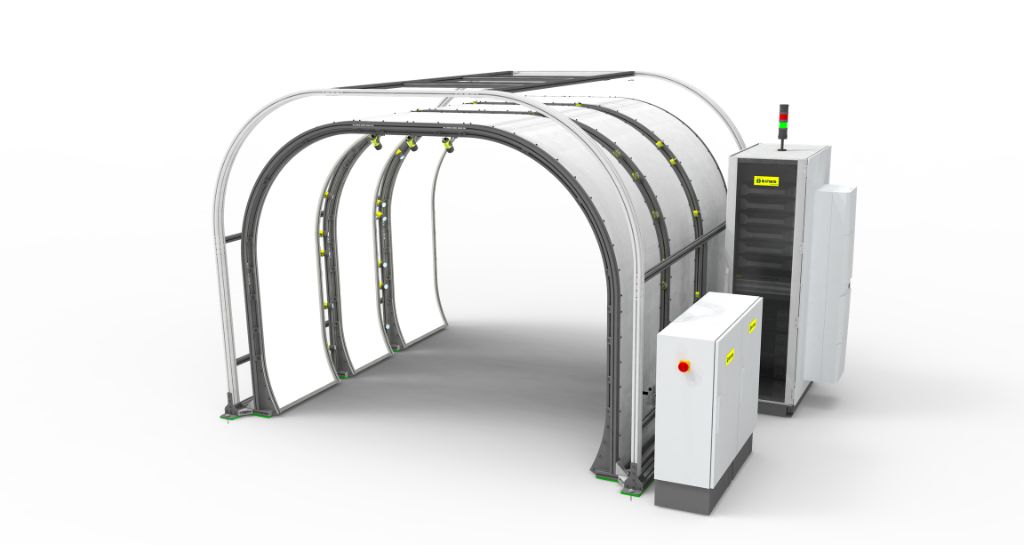
EINES develops advanced vision systems and automated inspection solutions that support quality control throughout the entire production process.
Body Shop inspection
EINES solutions help manufacturers verify dimensional accuracy, assembly quality, and structural consistency during body shop operations.
Paint Shop inspection
Advanced inspection systems automatically detect paint defects such as scratches, dust inclusions, orange peel, and coating inconsistencies before vehicles reach final assembly.
Final Assembly verification
Automated inspection technologies help verify component installation, assembly quality, and production traceability.
Battery Assembly inspection
As electric vehicle production expands, EINES solutions support battery manufacturing processes through advanced inspection and quality validation technologies.
Beyond complete vehicle production lines, EINES also supports the quality control requirements of both OEMs and Tier 1 suppliers. Our inspection technologies can be integrated not only into assembly processes but also into the manufacturing of individual automotive components, helping manufacturers identify defects earlier and maintain consistent quality standards throughout the supply chain.
From wheels, rims, doors, bumpers, and body panels to headliners, battery components, and painted surfaces, EINES solutions provide automated inspection capabilities tailored to the specific characteristics of each part. This flexibility enables manufacturers and suppliers to implement advanced quality control systems at multiple stages of production, improving traceability, reducing rework, and increasing overall manufacturing efficiency.
By combining Machine Vision, Artificial Intelligence, and automated analytics, EINES helps manufacturers improve inspection accuracy, reduce defects, and optimize quality control across the entire automotive plant.
If you’re looking to improve quality control, increase inspection accuracy, or accelerate your digital transformation strategy, EINES can help.
Contact EINES to discover how intelligent inspection solutions can optimize your automotive plant operations.
Frequently Asked Questions about Automotive Plants
What is an automotive plant?
An automotive plant is a manufacturing facility where vehicles are produced through a combination of assembly, inspection, testing, and quality control processes.
What technologies are used in modern automotive plants?
Modern plants commonly use robotics, Machine Vision systems, Artificial Intelligence, Industrial IoT platforms, and Digital Twins.
How does Machine Vision improve automotive manufacturing?
Machine Vision enables automated inspection, real-time defect detection, dimensional measurement, and assembly verification throughout the production process.
Why is quality control critical in vehicle production?
Quality control helps manufacturers reduce defects, improve customer satisfaction, lower production costs, and ensure compliance with safety standards.
What are the main challenges facing automotive plants today?
Some of the biggest challenges include managing production complexity, scaling electric vehicle manufacturing, maintaining quality at high production speeds, and meeting sustainability goals.