Step inside any modern automotive plant and one area immediately reflects the future of automotive manufacturing: the paint shop. What was once a largely manual process is now a highly controlled, data-driven environment powered by robotics, Machine Vision, and Artificial Intelligence.
Today, automatic car painting is no longer just about applying color to a vehicle body. It represents a sophisticated integration of robotics, intelligent inspection, and real-time analytics within a fully connected Industry 4.0 ecosystem. The paint shop has become one of the most technologically advanced areas of the entire production line.
Customers may never see the structural engineering behind a vehicle. They may not notice the precision welding or the complexity of the powertrain assembly. But they will immediately notice a paint defect. A minor surface imperfection can influence perceived quality, brand image, and ultimately purchasing decisions. That is why manufacturers are redefining paint quality control from the ground up.
What is automatic car painting in modern automotive manufacturing?
In advanced automotive manufacturing environments, automatic car painting refers to the robotic application, curing, and inspection of coatings through synchronized digital systems. Every stage is carefully controlled, measured, and optimized.
A typical automated paint process includes:
1. Surface cleaning and pretreatment
2. Primer application
3. Basecoat and color layering
4. Clearcoat finishing
5. Controlled curing
6. Inline inspection with Machine Vision systems
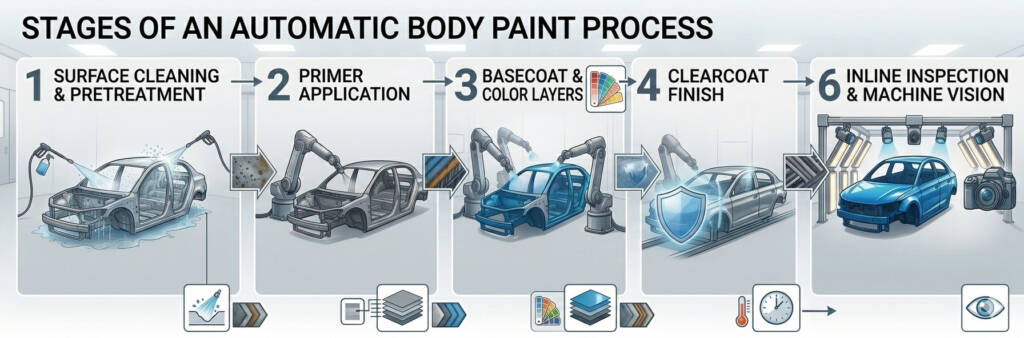
Each phase plays a critical role. Surface preparation ensures adhesion and corrosion resistance. Primer layers protect the metal body. Basecoat delivers color and visual identity. Clearcoat provides gloss, durability, and environmental protection.
What makes today’s process fundamentally different is integration. Paint shops are no longer isolated production units operating independently from the rest of the plant. Instead, they function as connected nodes within a broader Industry 4.0 framework, where application parameters, environmental conditions, and inspection results are continuously monitored and optimized.
Why automatic car painting is critical in Industry 4.0 automotive manufacturing
In competitive automotive manufacturing markets, surface quality directly impacts brand perception and customer trust. A flawless finish signals precision and engineering excellence.
Automatic car painting enhances performance in several measurable ways:
- Paint thickness uniformity
- Surface consistency across production batches
- Higher first-pass yield rates
- Reduced rework and repaint cycles
- Digital traceability for every vehicle
Within an Industry 4.0 environment, these improvements become quantifiable production metrics. Data from robotic applicators, sensors, and inspection systems feed into real-time dashboards. Plant managers can track defect rates, coating thickness variations, and process stability with unprecedented transparency.
How Does automatic car painting improve quality control?
The answer lies in automation combined with intelligent feedback loops.
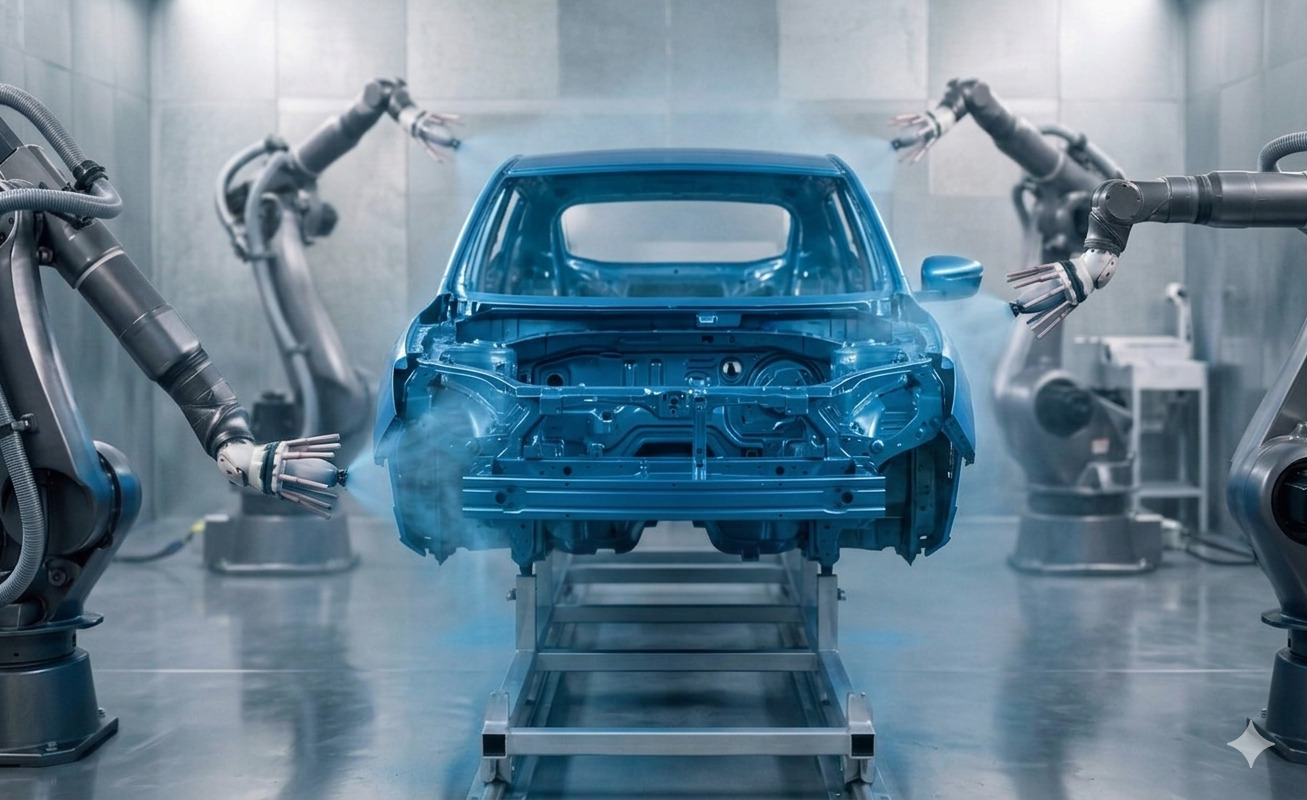
Robotic applicators maintain precise spray angles, distances, and velocities throughout every cycle. Unlike manual processes, robotic movements remain consistent over time. This eliminates variability caused by fatigue or human subjectivity.
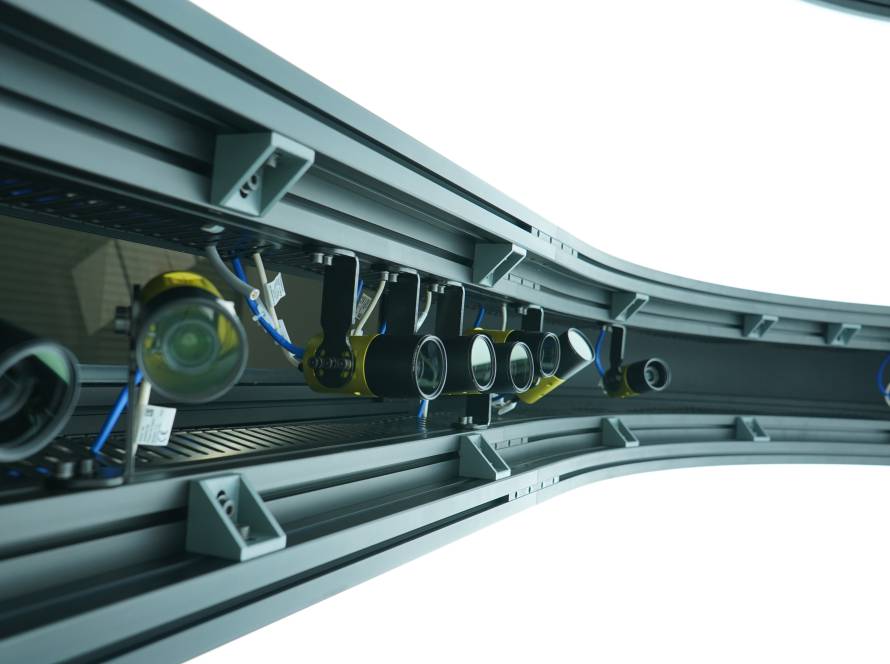
At the same time, Machine Vision systems continuously analyze the painted surface. High-resolution cameras capture detailed surface images under controlled lighting conditions. These images are processed instantly.
When integrated with Artificial Intelligence, the system can:
- Detect deviations in coating thickness or texture
- Classify defect types automatically
- Send corrective feedback to robotic applicators
- Reduce repaint cycles and material waste
This closed-loop architecture transforms paint inspection from reactive detection into predictive quality assurance. Instead of discovering defects after full curing and manual review, the system identifies trends early and corrects them proactively.
The role of Machine Vision and Artificial Intelligence in paint defect detection
The integration of Machine Vision and Artificial Intelligence is arguably the most transformative element in automatic car painting.
Traditionally, paint inspection relied heavily on trained operators examining vehicle bodies under specialized lighting tunnels. While effective, this approach depended on human perception and could vary between shifts.
Today, high-resolution imaging combined with AI-driven analytics enables objective, repeatable inspection.
- Objective defect detection
- Microscopic anomaly identification
- Real-time classification
- Continuous learning from production data
Artificial Intelligence models analyze texture, reflection patterns, and color variations. As more production data is collected, algorithms improve. Detection accuracy increases over time, reducing false positives and enhancing reliability.
Common paint defects identified using Machine Vision
Advanced systems can detect:
- Orange peel
- Runs and sags
- Dust inclusions
- Surface waviness
- Color inconsistencies
Because Artificial Intelligence models improve over time, detection accuracy increases as more production data is collected.
How Automatic Car Painting supports Industry 4.0 integration
Industry 4.0 is built on connectivity, intelligence, and adaptability. Automatic car painting fits naturally into this framework.
Automatic car painting contributes to this transformation by:
- Connecting robotic applicators to data analytics platforms
- Integrating inspection results into MES and ERP systems
- Enabling predictive maintenance
- Supporting digital twin environments
For example, if inspection data reveals a recurring pattern of micro-defects in a specific area of the vehicle body, AI systems can automatically adjust spray parameters. Maintenance alerts can also be triggered if performance indicators deviate from normal ranges.
This level of integration represents the shift toward autonomous production lines. The paint shop becomes not just a process stage, but an intelligent system capable of self-optimization.
Sustainability in advanced Automotive Manufacturing
Paint shops are among the most energy-intensive areas in automotive manufacturing due to ventilation systems and curing ovens. Sustainability has therefore become a strategic priority.
Automatic car painting contributes to environmental performance through:
- Improved electrostatic transfer efficiency
- Reduced overspray
- Lower solvent emissions
- Energy monitoring systems integrated into Industry 4.0 dashboards
Electrostatic spraying improves paint transfer rates, meaning more coating adheres to the vehicle and less becomes airborne waste. Digital monitoring systems track energy consumption in real time, allowing manufacturers to optimize airflow and oven cycles.
By combining automation, Machine Vision inspection, and AI-driven analytics, automotive manufacturers can balance surface perfection with environmental responsibility.
The future of Automatic Car Painting in Automotive Manufacturing
Looking ahead, automatic car painting will continue evolving toward greater autonomy and intelligence.
Emerging developments include:
- Self-learning Artificial Intelligence models
- Advanced 3D Machine Vision inspection
- Autonomous process calibration
- Full digital traceability across the vehicle lifecycle
As Industry 4.0 continues evolving, paint shops will operate as intelligent ecosystems where robotics, AI, and data analytics collaborate continuously to deliver higher quality with lower waste.
In this context, automatic car painting is far more than a technological upgrade. It has become a strategic pillar of next-generation automotive manufacturing — one that combines precision, efficiency, sustainability, and digital intelligence in a single integrated system.
As automatic car painting continues to evolve, the integration of AI, Machine Vision, and Industry 4.0 technologies will define the next benchmark in automotive surface quality. Manufacturers that adopt intelligent inspection and closed-loop control systems will be better positioned to reduce defects, optimize paint performance, and meet increasingly demanding quality standards.
If you are looking to enhance paint defect detection, improve surface inspection accuracy, or integrate advanced vision systems into your production line, at EINES we can help you move toward a fully data-driven paint quality strategy. Contact us to explore how intelligent inspection solutions can support your automatic car painting process and elevate your automotive manufacturing performance.