A flawless finish is never just about appearance. In automotive manufacturing, car paint defects affect perceived quality, rework costs, throughput, and brand reputation. That is why effective paint defect detection is no longer a final checkpoint task, but a strategic part of paint quality control across the entire paint shop.
Why can untreated paint defects become a major quality problem?
The importance of paint defects in vehicle quality control
In the automotive industry, surface quality is one of the first things customers notice.
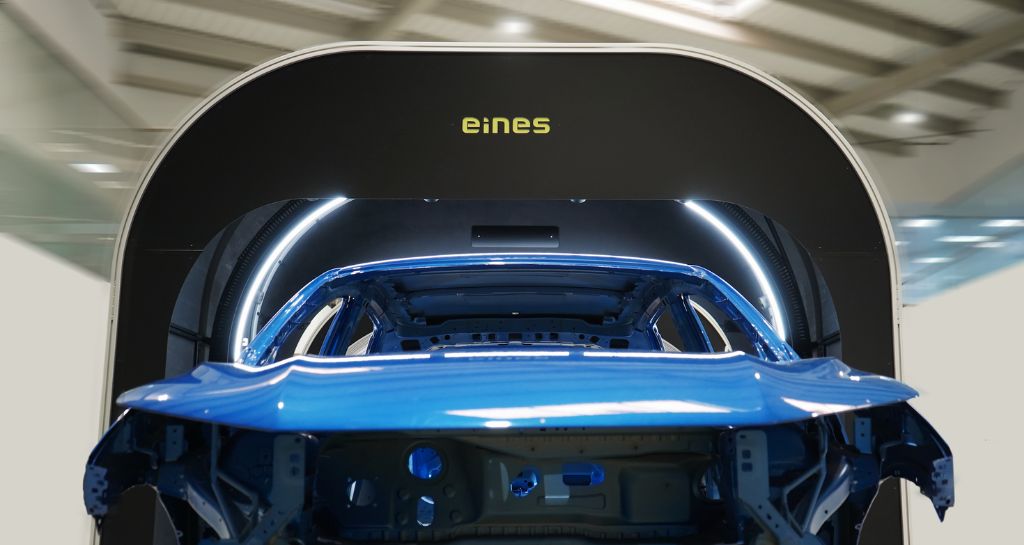
Even small paint surface imperfections can reduce the perceived value of a vehicle and create doubts about durability, precision, and manufacturing excellence. EINES consistently frames automotive paint inspection as a critical quality step because defects at this stage directly affect customer perception and often translate into costly rework or claims.
Minor imperfections can lead to serious quality issues
What starts as a minor surface issue can quickly become a larger quality problem if it is not detected early.
A small contamination point, the minimum variation, or a defect close to a body line can:
- move downstream,
- require additional labor,
- consume more material,
- and disrupt cycle time.
Early detection improves first-time quality, reduces scrap and rework, and helps only compliant bodies move forward in production.
Read about our success story: Our Paint Quality Inspector in Suzuki
What causes automotive paint defects in the paint shop?
Environmental factors
Many automotive paint defects originate in the paint shop environment itself.
- Temperature
- Humidity
- Airborne particles
- Contamination
All of them can influence how paint behaves on the surface and how defects appear after curing.
Paint application issues
Paint application parameters are another major source of variation.
When atomization is unstable, viscosity is not properly controlled, or spray conditions are inconsistent, manufacturers may see:
- Insufficient coverage
- Runs
- Bubbling
- Texture irregularities
- Color variation
These issues are especially critical because they affect both finish quality and process stability.
H3. Equipment-related problems in automotive paint inspection lines
Equipment performance also plays a decisive role.
The recurring appearance of imperfections on the painted surface may be exacerbated by:
- Ventilation inefficiencies
- Worn components
- Calibration drift
- Instability in the booth and application systems
Read more: Current State of Quality Control in the Automotive Industry
H3. Process variation and human factors behind repeated defects
Repeated defects are rarely random. They often come:
- From process variation
- Shift-to-shift differences
- Subjective inspection criteria
- Inconsistent responses from operators
This is one of the reasons why digitised and traceable inspection data is so important, once each bodywork panel has been inspected and recorded, teams can:
- Identify patterns of defects
- Compare trends
- Take action before the same problem recurs in multiple vehicles
H2. The most common automotive paint defects to look for
The most common automotive paint defects include:
- Orange peel
- Inclusions
- Bubbles
- Runs
- Scratches
- Pinholes
- Dents
- Adhesion-related issues such as peeling or flaking
In practice, OEMs also need to watch for color inconsistencies, contamination embedded in the finish, and defects located near edges, feature lines, and complex surfaces where visibility is more difficult. A strong automotive paint inspection process must therefore combine broad defect coverage with accurate classification by type, size, and severity.