Tire manufacturing requires extremely high quality standards. Even minor defects can affect tire performance, durability and safety. As production lines become increasingly automated, manufacturers need more reliable and efficient ways to identify imperfections before products reach the market.
This is where tire defect detection technology plays a crucial role.
By combining artificial intelligence (AI), machine vision and advanced inspection systems, manufacturers can automate quality control, detect defects with greater consistency and reduce the risk of defective products reaching customers.
In this article, we explore how tire defect detection works, the most common tire defects, the technologies behind automated inspection and why AI is becoming an essential part of modern tire manufacturing.
What Is Tire Defect Detection?
Tire defect detection is the process of identifying, locating and classifying imperfections in tires during or after the manufacturing process.
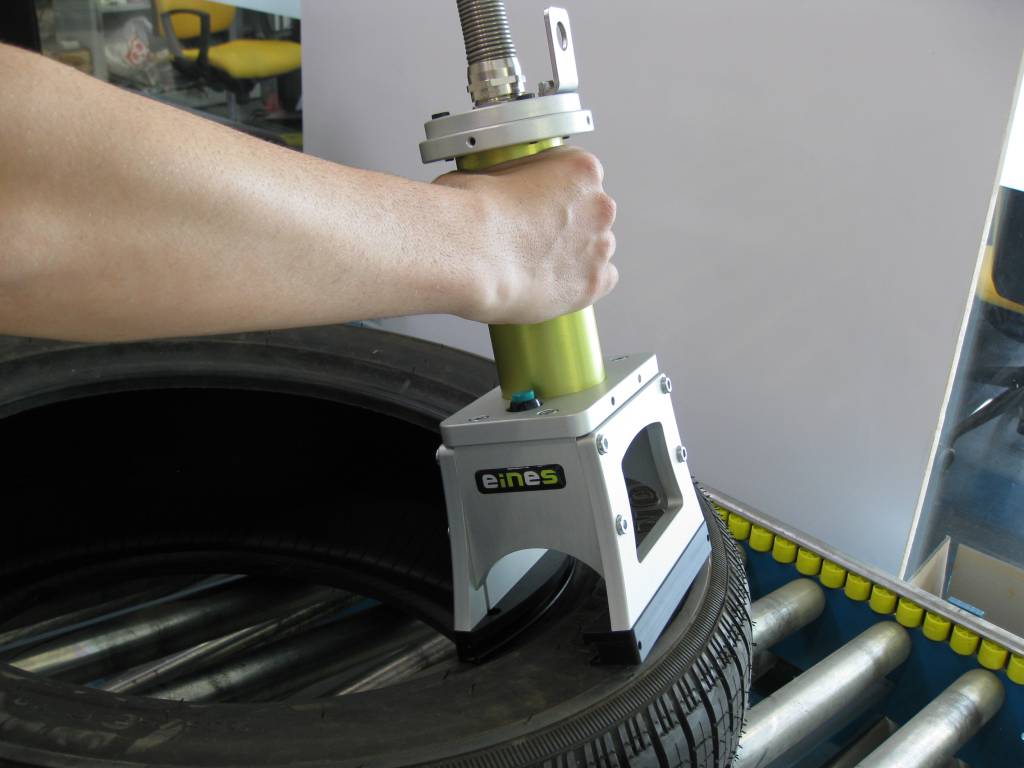
Traditionally, tire inspection has relied heavily on manual visual examinations performed by trained operators. Although human inspection remains valuable, it can be time-consuming, repetitive and subject to inconsistencies.
Modern tire defect detection systems use technologies such as industrial cameras, machine vision, artificial intelligence and non-destructive testing to identify potential defects automatically.
These systems can inspect different areas of a tire. The objective is to detect defects as early as possible, improve inspection consistency and support more efficient quality control processes.
Common Types of Tire Defects
Identifying different types of defects is one of the main challenges in tire manufacturing. Defects can vary significantly in appearance, size, location and severity.
Some of the most common imperfections include:
1. Surface Defects
Surface defects are visible imperfections affecting the external appearance of a tire. These can include scratches, cuts, stains, marks and irregular surface textures.
Automated visual inspection systems can analyze high-resolution images to identify abnormal patterns and distinguish potential defects from normal tire characteristics.
2. Rubber Flash
Rubber flash refers to excess rubber material that can appear around certain areas of a tire during the molding process.
Depending on its location and dimensions, excessive flash may require additional inspection or corrective action.
AI-powered inspection systems can help identify and measure these irregularities automatically.
3. Air Bubbles and Internal Defects
Air bubbles, inclusions and other internal irregularities can affect tire structural integrity.
Unlike external surface imperfections, these defects may not be visible through conventional visual inspection.
For this reason, manufacturers can use non-destructive inspection technologies such as X-ray imaging to identify internal abnormalities without damaging the tire.
4. Deformations and Irregularities
Deformations, bumps and abnormal shapes can indicate problems during manufacturing.
Advanced inspection systems can analyze tire geometry and surface characteristics to identify deviations from expected specifications.
How Does Automated Tire Defect Detection Work?
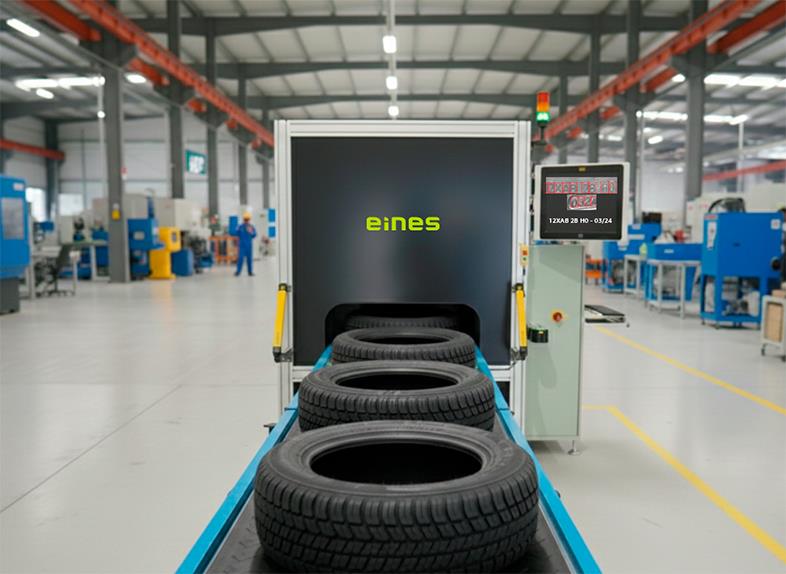
An automated tire defect detection system combines image acquisition, image processing and intelligent analysis to identify potential defects.

Although the exact configuration depends on the manufacturing environment, the process generally involves several stages.
Step 1: Image Acquisition
Industrial cameras and specialized lighting systems capture images of different tire surfaces.
The quality of image acquisition is particularly important because tires have complex textures, dark surfaces and different geometrical characteristics.
Depending on the inspection requirements, manufacturers can use 2D cameras, 3D vision systems, stereo-photometric imaging or X-ray technology.
Step 2: Image Processing
Once images have been captured, computer vision algorithms process the visual information.
This stage helps identify relevant characteristics, such as:
- Surface irregularities.
- Unusual patterns.
- Geometrical deviations.
- Abnormal textures.
- Potential defect locations.
Image processing prepares the data for subsequent analysis and classification.
Step 3: AI-Based Defect Detection
Artificial intelligence and deep learning algorithms can analyze tire images to recognize patterns associated with different defect categories.
Unlike traditional inspection methods based exclusively on predefined rules, machine learning models can learn from annotated examples of defective and non-defective tires.
Depending on the application, these systems can perform defect classification, object detection or image segmentation.
Step 4: Defect Classification and Evaluation
Detecting a potential defect is only part of the process.
Manufacturers also need to determine its type, location and severity.
AI-powered systems can classify detected imperfections and help quality control teams decide whether a tire requires further inspection, repair or rejection.
Step 5: Reporting and Quality Control
The final stage involves generating inspection results that can be integrated into the manufacturing workflow.
Inspection data can help manufacturers monitor recurring defects, identify production problems and improve quality management processes.
AI and Machine Vision in Tire Defect Detection
Artificial intelligence is transforming industrial quality inspection by making it possible to analyze complex visual information automatically.
In tire manufacturing, machine vision systems can inspect surfaces that would otherwise require extensive manual examination.
Deep learning models, including convolutional neural networks (CNNs) and vision transformers, can learn complex visual patterns and identify defects that may be difficult to detect using traditional image-processing techniques.
Some of the main advantages include:
Higher inspection consistency: Automated systems apply the same inspection criteria throughout production, reducing variability between manual inspections.
Faster quality control: Automated image analysis can process large volumes of inspection data and support high-throughput manufacturing environments.
Improved defect traceability: Digital inspection records make it easier to monitor defects and identify recurring quality issues.
Scalability: AI models can be adapted to different tire designs, inspection zones and defect categories, provided they are trained and validated with appropriate data.
Data-driven decisions: Inspection results can help manufacturers identify patterns and investigate the causes of recurring manufacturing defects.
Recent research published in the Journal of Intelligent Manufacturing has demonstrated how deep learning and multimodal inspection systems can detect, localize and classify tire surface defects across different tire areas.

Traditional Tire Inspection vs. Automated Tire Inspection
The transition from manual inspection to automated quality control offers several operational advantages.
| Traditional inspection | Automated inspection |
| Relies heavily on human operators | Uses cameras and AI algorithms |
| Can vary between inspectors | Applies consistent inspection criteria |
| Requires repetitive manual work | Automates repetitive inspection tasks |
| Limited digital traceability | Generates digital inspection records |
| Difficult to scale manually | Can support automated production lines |
However, automated inspection is not simply a matter of installing cameras and software. Successful implementation requires appropriate image acquisition, representative training data, reliable defect annotations and validation under real production conditions.
Human expertise also remains important for handling uncertain cases and continuously improving inspection criteria.
Challenges in Implementing Tire Defect Detection Systems
Despite significant technological advances, automated tire inspection presents several challenges.
Different Tire Designs
Tires come in different sizes, tread patterns and materials. An inspection model must be able to distinguish genuine defects from normal variations between products.
Complex Surface Characteristics
Black rubber surfaces, reflective areas and textured materials can make certain imperfections difficult to identify.
Lighting conditions and camera positioning therefore play an important role in achieving reliable results.
Limited Defect Data
Training effective AI models requires representative datasets containing different types of defects.
Collecting and accurately annotating defective tire images can be particularly challenging because some defects are rare or difficult to classify.
False Positives and False Negatives
An inspection system must balance its ability to detect defects with its tendency to incorrectly classify acceptable tires.
Continuous monitoring, model validation and appropriate inspection thresholds are essential for maintaining reliable performance.
The Future of Tire Defect Detection
The future of tire defect detection is closely connected to the development of artificial intelligence, industrial automation and smart manufacturing.
As deep learning models become more sophisticated, inspection systems are increasingly capable of analyzing complex defects and supporting more advanced quality assessment processes.
Several developments are particularly relevant:
- Advanced deep learning: More sophisticated neural networks can improve the detection of small, irregular and complex defects.
- 3D machine vision: Three-dimensional inspection can provide additional information about surface geometry and deformations.
- Multimodal inspection: Combining different imaging techniques and production data can provide a more comprehensive understanding of tire quality.
- Predictive quality control: Historical inspection data can help manufacturers identify recurring problems and improve production processes.
- Smart manufacturing integration: Connecting inspection systems with industrial automation platforms can improve traceability and production management.
The combination of these technologies is helping manufacturers move towards more automated, consistent and data-driven quality control.
Conclusion: Why Tire Defect Detection Matters
Tire defect detection is becoming an increasingly important component of modern tire manufacturing.
As production requirements become more demanding, manufacturers need inspection solutions capable of identifying defects accurately, consistently and efficiently.
By combining machine vision, artificial intelligence and advanced imaging technologies, automated inspection systems can improve defect identification, support quality control teams and help manufacturers optimize their production processes.
Investing in the right tire defect detection technology is therefore an important step towards more reliable manufacturing and higher product quality.
Frequently Asked Questions About Tire Defect Detection
What is tire defect detection?
Tire defect detection is the process of identifying and classifying imperfections in tires using manual inspection, machine vision, artificial intelligence or non-destructive testing technologies.
How does AI detect tire defects?
AI systems analyze images captured by industrial cameras or other inspection equipment. Deep learning algorithms identify visual patterns associated with defects and can classify, locate and evaluate potential imperfections.
What types of defects can automated tire inspection detect?
Depending on the inspection technology, systems can identify surface irregularities, cuts, scratches, rubber flash, air bubbles, deformations and internal structural defects.
What technologies are used for tire defect detection?
Common technologies include industrial cameras, machine vision, deep learning, convolutional neural networks, 3D imaging, stereo-photometric inspection and X-ray imaging.
Why is automated tire inspection important?
Automated tire inspection helps manufacturers improve inspection consistency, reduce repetitive manual work, increase defect traceability and support more efficient quality control processes.
Can AI replace manual tire inspection?
AI can automate many repetitive inspection tasks, but human expertise remains valuable for validating uncertain cases, defining quality standards and supervising inspection performance.