Visual inspection ensures that an interior part looks right, but it cannot guarantee that it works right. In complex Automotive Interiors —such as door panels, dashboards, or center consoles—a pinched wire harness or an unpinned connector can pass visual checks and still fail inside the final vehicle.
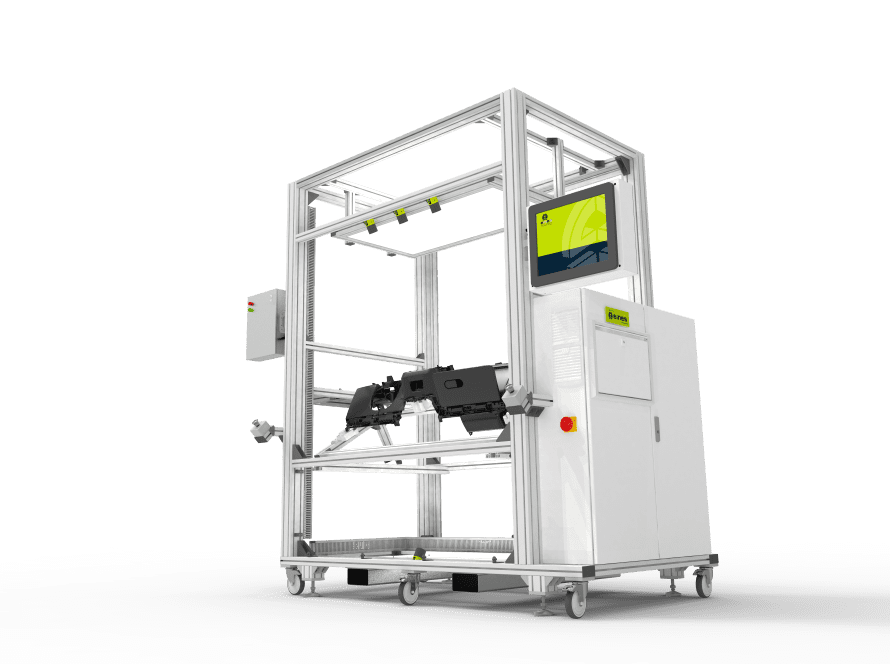
To eliminate electrical defects before line integration, Tier 1 suppliers and OEMs use ECOS (Electrical Check-Out System)—an automated testing application integrated directly into the assembly and inspection station.
What is ECOS (Electrical Check-Out System)?
ECOS is a proprietary functional testing solution designed to verify the electrical performance of Automotive Interiors. By performing automated end-of-line electrical diagnostics alongside visual inspection, ECOS ensures 100% functional compliance before components leave the plant.

Key Diagnostic Measurements in Automotive Interiors
During a rapid inline cycle, the ECOS module connects to the component’s electrical harness to measure critical parameters across Automotive Interiors:
| Voltage Drop Verification | Power Consumption Analysis | Pin Resistance Testing |
| Confirms proper power delivery to window switches, ambient light strips, and electronic control units (ECUs). | Detects short circuits, high resistance, or parasitic draws in real time. | Ensures connectors, door lock actuators, mirrors, and speakers are fully seated and pinned correctly. |
Combining Visual AI with ECOS Functional Testing
The real advantage of ECOS is its seamless integration with Eines Vision Systems.
While vision cameras inspect clip seating, surface cosmetics, and component presence, ECOS simultaneously runs electrical diagnostics on the same bench. Combining visual and functional testing into a single station optimizes cycle times, reduces footprint, and eliminates human error across Automotive Interiors production lines.
Beyond Functional Diagnostics: Complete Part Inspection
While electrical testing is essential, a complete quality strategy must also verify physical integrity. In addition to functional checks, our inspection stations evaluate other critical aspects of the part, such as component presence, clip seating, color matching, stitching alignment, and cosmetic surface defects.
To learn more about how machine vision automates physical quality control on door panels and dashboards, read our blog Improving Automotive Interiors: Technologies for perfect finish.
Conclusion
Detecting electrical faults at the sub-assembly stage is far more cost-effective than troubleshooting a fully assembled vehicle. Integrating ECOS into your quality control lines guarantees that every door panel, dashboard, or console delivered to the OEM is both visually flawless and 100% electrically operational.